Showing posts with label noitamina. Show all posts

Sunday, September 16, 2012

[Anime Survivor 2] 3rd Place - Natsuyuki Rendezvous


Let's make this short and sweet before the shine is gone, folks. I'm going to hate myself for this review miles more than you might.

I had convinced myself that we had a sure thoroughbred this season once we saw what the moe train wrecks had wrought. No matter how many times Tori got punched in the crotch, no matter how many lingerie shots Campione! gave us, no matter how many ping-pong balls got eaten by Chinatsu's hair in Yuru Yuri...we were doomed to have a long, hot season of anime that we would forget once the first episode of Robotic;Notes was screened.

I'm just stunned that noitaminA would royally let us down. The wide-open net was there. All they had to do was nudge the ball through, but Moyashimon Returns shanked the kick, missed completely with its complete change of character profiles and drab storylines from the first season. The second show clanged their shot off the crossbar in the 90th minute. (Pardon the soccer metaphor—finally saw the US National Team win!)

Considering the severe letdown, I really shouldn't devote much time to this review. Third place in Summer 2012's Anime Survivor is Natsuyuki Rendezvous.

Thursday, August 23, 2012

[Anime Survivor 2] 6th Place - Moyashimon: Reloaded


For the longest time, I had hoped that noitaminA would target the right shows for a sequel. So far, the only sequels have been Honey & Clover (back in 2007, before the first streaming anime shows were screened) and a few follow-ups to Nodame Cantabile. Since 2010, we have had a few two-cours shows, but one of them was Guilty Crown, and I'm pretty sure most of fandom isn't hammering down doors to get that one green-lighted for a return.

There could be many arguments that some don't deserve sequels (No.6, Hataraki Man) and that others would have continuity ruined by a second season (AnoHana, House of Five Leaves), but many could say that shows like Princess Jellyfish, Shiki, Eden of the East, and Fractale Tatami Galaxy are ripe and ready for one. You could say they are practically fermenting in potential.

How appropriate that I mention fermenting. It's just too bad this show wasn't left in the vat for a little longer. Sixth Place in Summer 2012's Anime Survivor is Moyashimon Returns, a noitaminA show that didn't deserve a half-hearted attempt at a sequel.

Saturday, July 28, 2012

Summer 2012's Anime Survivor (Live From Otakon!*)


Hello from Otakon 2012! AniMaybe is having a great time in Baltimore! We're partying with cosplayers and attending all the big panels and industry announcements and glowstick-glowstick-glowstick dacing at raves and

Yeah, yeah. That's all one big fat lie.

Hardy har, Geoff. Joke's on you. Everyone and their tsundere sister is having more fun without you at Otakon, while you're stuck back home with your work and lack of a decent personal budget.

Fine. You know what? I am totally prepared to have fun without you guys. Screw y'all and your collective Haruhi dances. I'm going to have just as good a time partying with Crunchyroll and Funimation during...

Summer 2012's Anime Survivor!

(Oh. That's right. Everyone's at Otakon, so the announcement loses its punch.)

No matter! I'm going to run my own panel from the solitude of my apartment called "Geoff Tebbetts Actually Liked Hand Maid May: My Year With A Tsutaya Records Rental Card"! Just go ahead and party with the bigwigs from ANN! I'll be fine by myself!

Tuesday, July 3, 2012

Anime Survivor: Spring '12 - Second Place!


It feels almost inevitable that the final act during this Anime Survivor experiment would be between two shows that know how to use a squirt gun.

The tale of the tape in this last showdown couldn't be any more lopsided. Tsuritama is vibrant in both atmosphere and appearance, its characters rarely frowning, even in defeat or the midst of an oncoming natural disaster. Meanwhile, the Fujiko Mine animation is almost too dark for its traditionally-comedic roots, the improbable stunts by the Lupin the Third cast marred by Fujiko's tormented beginnings.

It's interesting that the squirt gun itself in one show is a portal displaying the other show's general vibe. An unexpected comedy relief in The Woman Called Fujiko Mine, yet an actual device that could be dangerous in the wrong hands in Tsuritama, the water pistol is pretty much the central device in this spring. It seems we'd need something to cool down an anime season that's been hotter than most in recent memory.

Enough of the chit-chat. That makes the announcement anticlimactic. The fifteenth show to be eliminated from Anime Survivor and this season's runner-up is...

(And yes, there are some spoilers ahead...)

Monday, May 9, 2011

F1RST IMPRESSIONS: AnoHana

We're nearing the end of our preview of the newest anime shows for Spring 2011 with AnoHana, an original A-1 Pictures animation that occupies the second of two noitaminA slots on Fuji TV.

Storyline: 4

As the heat from the summer months hammer down on Jinta, a reclusive teen who has given up on going to school, he's also haunted by a different presence—the ghost of "Menma", a childlike girl with silver hair. The two of them comprised part of the "Super Peace Busters" when they were kids, playing with their other friends Tsuruko, Anaru, Poppo, and Yukiatsu. While the nicknames still stick years later, Menma's unfortunate death after a spat within the group has demolished the friendship between the remaining five.

However, Menma isn't some sort of undetectable ghost—when she hangs on people, they feel her weight, and bumps against tables upset glasses. Jinta calls it a manifestation of his "stress", but Menma's desire for a "wish" to be fulfilled stirs him to the point of revisiting the old hangout where the "Super Peace Busters" used to play. It's here where he meets his friend Poppo again and gets the sense that everyone's still attached to Menma's death in some form.

AnoHana, short for Ano Hi Mita Hana no Namae o Boku-tachi wa Mada Shiranai ("We Still Don't Know the Name of the Flower We Saw That Day"), is basically striving for attachment to the viewers still looking for their past childhood, whether the memories are good or bad, and that's typically a good subject for a solid story. If anything, I expect the story to play like a Studio Ghibli film and focus on that conflict between maturity and familiarity, change and complacency. It should be a good show as the ex-friends reunite.

Animation: 3

While the hand-drawn animation is generally without much in terms of flaws, on par for the course with A-1 Pictures, there isn't anything overly attracting about the overall flow and art. We get some good backgrounds, but there rightfully shouldn't be much in terms of focus on how pretty the landscapes are or how fluid the characters move. This is a story-fueled show, so the art is on point to stay away from complex points-of-view.

Characters: 3

At first, I was tempted to lower my grade when I came across the plain characters and the character designs by Masayoshi Tanaka (Highschool of the Dead)—there just doesn't seem to be much on the surface to make this random display of six characters appealing. However, I'm allowing for some developmental leeway, as we see just how much some of the characters have changed in ten years. Menma does appear to be the childish sort and a little frustrating to accept as a central character, but the role fits for a ghost who hasn't matured in ten years.

Track: 4

Considering the idea that AnoHana still takes place in the 21st century, even during the flashbacks, it was nice that the staff opted for someone who had experience composing music for dramas during that period. While the REMEDIOS brand hasn't produced anime soundtracks, they've worked on films and TV dramas of the late 90's/early 00's (Friends, PiCNiC), so the music gets a great hint of breeziness. Especially meaningful is the ending theme, a cover of pop band Zone's 2001 single "secret base ~Kimi ni Kureta Mono~" that captures the final passage of summer.

"Hype": 4

The noitaminA and A-1 pictures names should be enough to lift AnoHana to a little more of a respected status, but the real reason to watch may be in the staff listing. The AnoHana project managed to lure in Tatsuyuki Nagai for direction, and his work on lighthearted dramas (Toradora!, Honey and Clover) has been commendable. I can't wait to see how this one turns out.

Overall: 18/25
Trends seem to indicate that noitaminA is opting for a bipolar approach to their seasonal shows by creating one that depends more on action ([C], Fractale) and one that depends more on drama (Wandering Son). I certainly have no problems with this approach at all, as it gives everyone a chance to appreciate the product. I'm a little surprised to find that AnoHana was the product that wasn't selected for online streaming, but it's likely that this slow sort of drama may not be appreciated by foreign fans as much as domestic fans might.

Nevertheless, if you were a big fan of Wandering Son last season and need a show that takes the edges off of the comedies out there, AnoHana is a selection that should appeal to you.

Thursday, April 28, 2011

F1RST IMPRESSIONS: [C]

We continue our look at the newest anime shows for Spring 2011 with [C], a Tatsunoko Production animation that occupies the first of two noitaminA slots on Fuji TV.

Storyline: 3

Realistically, the Japanese economy has been limping through busted bubbles here and there, but very rarely does national affluence affect anime shows. There have been stories of personal debt, but what if the Japanese economy tanked and greed was dictating human sentiment?

Enter the world of [C] (Control: The Money and Soul of Possibility). While our vigilant hero Kimimaro struggles with two part-time jobs and a college scholarship to pave the way to a gold-plated future as a civil servant, a mysterious world lies on the other side of the ATM screen, one where people in desperate need of cash sacrifice their future for the chance to get paid now. The "Financial District" is a digitized environment where human "Entrepreneurs" fight using their "Assets", powerful horned beings that attack through financial contributions. When a void is created through a suicide, Kimimaro is confronted by Masakaki, a grinning Cheshire representative of the Financial District. He's randomly given the opportunity to become a participant in the game, enticed with the opportunity to abandon his jobs and obtain a girlfriend.

While the background is enticing, I can't get over this idea that we've seen [C] before. That sense of fiscal temptation has been there in gambling shows like Kaiji, but the idea of holding a tournament against other greedy dealers for the sake of escaping debt was used back in Liar Game, as well. The only difference here is that the tournament is more like Tron. I'm certain that [C] will be more than just a Shônen Jump battle show, but it hardly feels that way right now.

Animation: 3

Tatsunoko Productions have suddenly been active this season, put in charge of the animation for Sket Dance, Pretty Rhythm, and this series. While there are some creative mixes in animation, particularly in the usage of side-bar subtitles that creep into frame like digital black slime, there are also some awkward moments where computer animation clashes styles. At times, it feels seamless, but it's pretty obvious where more polygonal animation takes center stage. One moment, Masakaki moves fluidly; the next moment, he feels as robotic as a "Money For Nothing" video. There just isn't much consistency.

Characters: 4

It's been about a year since Alice In Wonderland hit movie theaters in Japan, but it seems the "Mad Hatter" has been a big influence on character design. Blue Exorcist has already had a top-hatted madman grace its episodes, although he seems to be more a hidden enigma. Masakaki, on the other hand, is played as a terrific tempter by Takahiro Sakurai (Yaichi, House of Five Leaves), while the supporting characters could use their various backgrounds to build up Kimimaro.

Track: 4

The music really does hit all the right notes, if you pardon the pun. While you do get a handful of electronica in the songs, the music manages to be calculating during the dramatic parts and energizing during the action sequences. The opening and ending songs—"Matoryoshka" by NICO Touches the Walls and "RPG" from School Food Punishment (the coolest name for a band ever)—also provide some good melodies.

"Hype": 4

noitaminA has consistently produced some talented shows over the past few years, so the announcement of [C] really produced some anticipation for a good show. While it doesn't necessarily mean that the end result will be great, the tease of it succeeding has yet to wear off. While director Kenji Nakamura has yet to work in the lead role, he's done some solid work in other noitaminA shows, and screenwriter Noboru Takagi has produced fine works in Durarara!! and Hell Girl.

Overall: 18/25
I'm starting to fear that noitaminA, despite its recent critical successes with Wandering Son, Shiki and Princess Jellyfish, is losing part of its luster. Fractale burned out pretty quickly, and no one has picked up the other noitaminA title for Spring 2011, AnoHana. The tides could change with the two summer titles (No. 6, Usagi Drop), but for now [C] is helping the animation block stay relevant. While the production values are decent and the story has a lot to work with, there's this sinking feeling that we're watching Yu-Gi-Oh! being played with Monopoly money.

Maybe we're all being conned into a good show, but looking at the surface it's hard to tell if [C] is real or counterfeit yet. We're going to need some time.

([C] is simulcast on Funimation every Thursday at 12:45 PM EDT.)

Tuesday, March 8, 2011

Your Guide to the Spring 2011 Anime Season!

Let's be real about the past anime season—winter hasn't been kind to the casual fan. The number of animated shows usually decrease for the winter, probably due to the crowded television schedules in the beginning of the year, and 2011 has been no different. In addition, the number of quality shows have also fallen, mostly due to the lack of new shows running.

However, the warmer weather brings rejuvenation and revitalization. According to the count by The Cartdriver and Moonphase, over 40 new shows are debuting this new season on TV alone! Seriously?

I don't think I'm going to be able to have enough hours of the day to follow all of these, but here's a preview of the new shows to take a look at. Each is listed under its debut date with their full Japanese names and a digestible plot synopsis.

March 14
Moshidora (もし高校野球の女子マネージャーがドラッカーの『マネジメント』を読んだら)
The title may sound clunky (What if the Female Manager of the High-School Baseball Team Read Drucker's "Management"?), but the story of how a baseball team was straightened out by a spunky female manager and the works of social management theorist Peter Drucker is actually a sincere cult hit in Japan.

April 1
The third title for the anime line developed by Marvel and Madhouse, this story of the X-Men pits them in Japan against the U-Men as they try to rescue Hisako Ichiki, known as "Armor" in the comics.

April 2
The third series for the Jewelpet franchise, another magical girl will come to Jewel Land to try to collect cute, lovable Happy Meal toys Jewelpets.

The Pretty Rhythm dancing/idol game gets an anime makeover before Vocaloid does. Three middle-school girls strive for stardom as a musical ice-skating unit.

(Adventure)
Sink Izumi, a kid from Earth, is transported to the Republic of Biscotti, a world of dog-eared humans, in order to help Princess Millhiore protect the country from Galette rebels. (An answer to Asobi ni Ikuyo?)

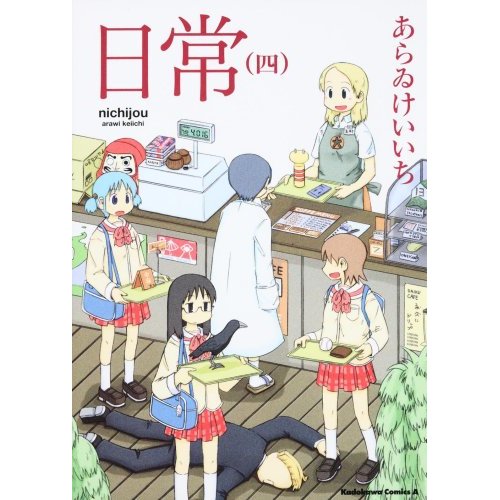
Everyday Life (Nichijô 日常)
(Slice-of-life, Comedy)
After a year-long hiatus, Kyoto Animation returns with a gag story about everyday life interrupted by things you normally wouldn't see everyday. Perhaps a "What's Wrong With This Picture?" picture show?

You're Being Summoned, Azazel (よんでますよ、アザゼルさん。)
(Supernatural, Comedy)
Akutabe, a detective and summoner of demons, contacts Azazel, an unprofessional devil, to be used for a particular case, but things naturally get out of hand.

Abnormal Physiology Seminar (Hen Zemi 変ゼミ)
(Comedy)
Take one normal college student, Nanako Matsutaka, and put her in a course where the professor teaches nothing but sexual deviancy. Guess what happens.

April 3
(Action)
The popular game that pits spinning tops in battle returns for a sixth season.

(Children)
The stuffed critters from "Suzy's Zoo", a line of greeting cards produced by Suzy Spafford, get their own series of animated shorts.

Hanasaku Iroha (花咲くいろは)
(Slice-of-life)
When Tokyo-ite Matsumae moves out to the country to help her grandmother with her hot-spring inn, she meets new friends and learns to understand the simpler life.

We Don't Have Wings ~ Under the Innocent Sky (Oretachi ni Tsubasa ga Nai 俺たちに翼はない)
(Harem, Romance)
Based on the visual novel produced by Navel. The story of teenagers from the town of Yanagihara and how their lives cross in dramatic ways. (Read: Yosuga no Sora without the incest.)

April 4
Bridge to the Starry Skies (Hoshizora e Kakaru Hashi 星空へ架かる橋)
(Harem)
Do we need to say anything more than "harem"? Okay. Young male Kazuma moves to a new town and...yeah, we really don't need to say anything more.

Gintama' (2nd Season)
(Action, Comedy)
The absurd "odd-jobs" career of samurai Gintoki with his associates Shinpachi and Kagura resumes after a year-long hiatus.

Sengoku Otome: Momoiro Paradox (戦国乙女~桃色パラドックス~)
(Action)
Another anime converted from a pachinko game. If you couldn't guess, the historical figures of Japan's "Warring States" period have once again been converted into buxom ladies. "But, wait, didn't you actually like Hyakka Ryo..." *punch*

April 5
Gambling Apocalypse Kaiji Season 2 (Tobaku Mokushiroku Kaiji 賭博黙示録カイジ)
(Drama, Gambling)
Our main character Kaiji, a man eternally in debt, disappears from society after managing to succeed in risky games of chance. So what does this have to do with Endô, his land shark?

(Adventure)
So this group of Akihabara friends have been sending messages into the past through their souped-up microwave. Sounds innocent enough, but a shadowy organization is looking to stop them at all costs.

April 6
(Fantasy)
Kid loves fashion accessories and animals. Kid finds a nice rock she can use for an accessory. Kid finds out the rock is a fashion accessory AND an animal prince. Life is good.

Health & Phys Ed for 30-Year-Olds (30-sai no Hoken Taiiku 30歳の保健体育)
(Comedy)
A 30-year-old male virgin meets a 30-year-old female virgin. Who is to show them how to make whoopie? Why, the Gods of Sex, that's who!

April 7
(Slice-of-life, comedy)
New Shônen Jump show #1. The "Campus Support Group" is here to improve the quality of high-school life! So what if Bossun, Himeko, and Switch are hardly the spitting image of perfection themselves...

Tea for Universe, Tea for Life (Hyouge Mono へうげもの)
(Drama)
Set in the "Warring States" period, Hyouge Mono covers the path of enrichment through tea chosen by Sasuke Furuta, a vassal under the great Nobunaga Oda.

Aria the Scarlet Ammo (Hidan no Aria 緋弾のアリア)
(Action, Comedy)
Having entered a Tokyo high school that specializes in detective studies and armed combat, Kinji meets its most powerful student, H. Aria Kanzaki, during a bombing attempt.

Sofuteni! (そふてにっ)
(Comedy)
Middle-school student Asuna wants her team to aim for the National Soft-Tennis Championship, but the club itself isn't so serious about aiming for the top...

(Comedy, Slice-of-life)
Stop me if you've heard this one. Pretty nondescript show based on a yon-koma about high school girls. (Now, why didn't you stop me?)

Electromagnetic Wave Girl and Adolescent Boy (Denpa Onna to Seishun Otoko 電波女と青春男)
(Science fiction)
Second-year high-school student Makoto, meet your estranged cousin Erio. She's been gone a while and thinks she's an alien. You two should get along well while she lives in your apartment.

(Comedy, Horror)
The classic Go Nagai manga and 1973 anime adaption gets a remake. Lead character Enma leads the "Yôkai Patrol" to the world of humans in order to capture rogue demons.

(Comedy)
The love-hate relationship between Kanako, a girl with a romantic infatuation over other girls, and Mariya, a cross-dressing boy with a sadistic character, finally returns for a second season.

April 8
World's First Love (Sekaiichi Hatsukoi 世界一初恋)
(Boys Love, Romance, Comedy)
Ritsu enters a publishing company that works on shôjo love manga, a difficult task for one who has vowed never to fall in love again, but the strict chief editor turns out to be his first love!

April 10
Blue Exorcist (Ao no Ekusoshisuto 青の祓魔師)
(Action, Supernatural)
Rin and Yukio were both born to be receptacles of Satan, but only Rin had the strength to be occupied by the Demon Lord for his conquest of the human world. However, when Satan kills Rin's foster father, Rin plans to become an Exorcist to defeat Satan.

Put It All In The Ring 1: World Tournament Chapter (Ringu ni Kakero 1: Sekai Taikai-hen リングにかけろ1:世界大会編)
(Boxing)
Team Golden Japan Jr. joins the ranks of the World Junior Boxing Championship in order to challenge powerhouse Team Greece and bring the title home.

Astarotte's Toy! (Asutarotte no Omocha アスタロッテのおもちゃ!)
(Harem, Comedy)
Astarotte is a young succubus who absolutely hates males, but succubi naturally need male...um...essence to live. Thus, she has to put up with Naoya, the first male inducted into her harem.

April 11
(Fantasy)
In the distant future, card battles are still all the rage, but the cycle continues, as Yûma Tsukumo must deal with the ghostly Astral to return his memories to him.

The World God Only Knows II (Kami Nomi Zo Shiru Sekai II 神のみぞ知るセカイII)
(Comedy, Harem)
Keima and Elsie return again to try to capture (the demon spirits in) the hearts of young girls, all for the sake of the demon world.

(Romance, Adventure)
Those who know the series know it. Those who don't? "Behold...the power...of breast milk."

April 16
(Action, Horror)
Ganta Igarashi wants to find the "Red Man" who killed his entire middle-school class and framed him for the murders, but first he must get out of the prison known as "Deadman Wonderland".

Slated for April
(Comedy, Action)
New Shônen Jump show #2. Toriko wanders the land as a Super-Sayajin-like "Gourmet Hunter" in search of the choicest foods and ingredients for some of the world's superb dishes.

(Science Fiction)
Wild Tiger is the "King of Heroes" in a city filled with them, but how is he going to be able to team up with Barnaby Brooks Jr., someone who treats being a hero totally differently?

Ano Hana: We Still Don't Know The Name of That Flower We Saw That Day (Ano Hi Mita Hana no Namae o Boku-tachi wa Mada Shiranai あの日見た花の名前を僕達はまだ知らない。)
(Drama)
The first noitaminA title of the season, Jintan, a shut-in who has only been able to befriend his high-school classmate Menma, must find his other four high-school friends as a promise to fulfill Menma's wish.

[C] (The Money of Soul And Possibility Control)
(Drama, Science Fiction)
While Kimimaro and most of Japan has been rescued from financial disaster by the "Sovereign Waelth Fund", he still needs cash. He'll be able to pay off his loan if he can survive a location known as "The Financial District".

Showa Story (Shōwa Monogatari 昭和物語)
(Drama)
An animated version of the successful live-action series and movie that chronicles the story of the Yamazaki family during the 39th year of Shôwa, 1964, the year the Olympics came to Tokyo.

(Drama)
A sequel to the Fireball 3D shorts produced through Japan's Disney Channel.

Tono to Issho, 2nd Season
(Comedy)
You've seen the shorts before. The historical figure gag comedy returns for more.

(Appleseed XIII was announced for Spring 2011, but will premiere June 13th.)

OAV/DVD Specials
Air Gear, Amagami SS, Asobi ni Ikuyo!, Baka to Test, Beelzebub, Black Lagoon, Blessing of the Campanella, Fairy Tail, Highschool of the Dead, Kämpfer für die Liebe, Koe de Oshigoto!, Maid-Sama!, Mobile Suit Gundam Unicorn, Morita-kun wa Mukuchi, Nana and Kaoru, Norageki, Princess Resurrection, Queen's Blade, Seitokai Yakuindomo, Sex Pistols, Spelunker-Sensei, Valkyria Chronicles, xxxHolic, Yozakura Quartet.

First thoughts? It'll be hard to scarf down all of these shows to pick out the prime cuts, but if history has served its purpose well, the sequels (Gintama', Maria Holic Alive, The World God Only Knows II) should feel the need for those starving for niche titles. Of the truly new stuff, Shônen Jump's Sket Dance and Toriko could actually provide a resurgence for the magic-maker anthology, especially during a point when Shônen Sunday and Shônen Magazine are relatively quiet. The two noitaminA titles, [C] and Ano Hana should also likely do well, considering how well the block has performed the past year.

However, I see three titles performing solidly based on past reputation and current trailers.
  1. Everyone's pretty much been salivating for more KyoAni, so Nichijô should gather tons of fans while K-On! incubates for another series (you mean, you haven't heard about the two new manga titles from kakifly this spring?).
  2. I also see Blue Exorcist performing well, especially with storyboard director Tensai Okamura (Kikaider, Wolf's Rain) taking charge of direction with A-1 Pictures (Kannagi, Occult Academy, Fractale) as the animation studio.
  3. After a bit of a production delay, Deadman Wonderland should also hit it big. For some reason, I feel that delays often increase the palpability of a show and make it all the more an anxious watch.
Definite passes? There are a few.
  1. The two visual novel shows (Oretachi ni Tsubasa ga Nai, Hoshizora e Kakaru Hashi) feel interchangeable. Really nothing between the two that would pull me towards watching them, especially the car wrecks we've had in the past two seasons. Seems they all like to look to the sky for inspiration, too (Starry Sky, Yosuga no Sora).
  2. No breaks for the sex parodies this season, either. While Hen Zemi looks like the pain could be minor, Health & Phys Ed for 30-Year-Olds sounds like it could be the next Rio Rainbow Gate.
  3. There's no doubt that Qwaser no Stigmata II will overindulge us with icky sexual gratuity, but can Astarotte's Toy! sound any creepier? A loli succubus who, I'm told, is around ten-years-old and hunting for sex? And you wonder why candy corporation Lotte might have had a beef with the original name?
So what is driving your interest this upcoming season? Let us know here or on our Facebook or Twitter pages!

Thursday, March 3, 2011

Wandering Son (Episodes 4 - 6)

(For a review of Episodes 1 - 3, click here. Some spoilers may be lurking.)

It's hard to recall the space in the timeline of anime where transgenderism transformed from a dramatic plot device into a comedic plot device. While odes to Takarazuka such as Princess Knight and The Rose of Versailles viewed such a situation as an internal struggle versus a societal struggle, manga such as Ranma 1/2 and Futaba-Kun Change! turned the situation into a comedic one. Still between those shows and titles, the troubles and concerns of dealing with dueling gender identities were still there.

However, somewhere along the track, the train broke off its course. Things got a little hotter with the likes of Revolutionary Girl Utena. Anime and manga started to explore the sexual hijinks that occurred from transvestitism and gender-swapping (Pretty Face, Kampfer). Needless to say, some boundaries have likely been pushed a bit too far without exploring the true confusion and pain that comes from the fear of rejection regarding gender identities.

While Wandering Son has carefully extracted its story from the middle of its manga chapters, the show has embraced the vital portion of the story, Class 1-3's re-imagining of Romeo and Juliet for the culture festival. The idea of reversing the gender roles is a secret desire for Shûichi and Yoshino, as both of them express their wishes to play the lead roles. In a very tender moment, while out shopping for clothes, Yoshino and Shûichi make a promise to exchange names in the future.

However, there are many other influences surrounding them that make such transitions harder to envision. Saori still seems to have a rather strong attachment to Shûichi, noting that she would want to play Romeo opposite Shûichi's Juliet. However, the lottery for determining roles actually gives the lead to Shûichi's friend Makoto, who expressed his own desires for the role. With Saori ready to destroy the script with changes into a darker story, Makoto frets over his role, but both learn to swallow their pride and nerves, respectively.

What we manage to get out of these three episodes surrounding the play are glimpses into those surrounding this pretzel of a relationship. We get clueless jealousy from Saori's "boyfriend" Ninomiya, who thinks he could be a cuter alternative over Shûichi. We get conflicting intentions from Anna, a model friend of Shûichi's sister Maho, who might have some sort of thing for Shûichi. We even get some background surrounding the two adult friends of Shûichi and Yoshino's, tranvestite Yuki and her lover "Shii-chan", as they visit the cultural festival.

There are plenty of glimpses into Shûichi's shyness and desire to become a girl in the future, but we're not yet seeing the same for Yoshino just yet. Her desires to hide her developing figure are the only motivation we see just yet, but we also get a small hint at the pain from such conflict inside her, a scene with Yoshino coiling into a ball underwater during a free swim. Perhaps this is the hint at rebirth that she desires, and I hope we see a lot more regarding her own will to change.

It's good to see some time taken to show the innocence behind transgenderism, but there are also those careful taboos that lurk. While Shûichi is rather introverted in his optimism about becoming a girl, often crossdressing in a public that doesn't recognize him, we get that fear and insecurity of those taboos from Makoto, who must play his role before friends and family. While it's likely the show will not end in disaster, there is also this uncertainty that the show may glorify transgenderism too much, and that likely will define Makoto's role—he will be that voice of doubt while Shûichi lets Yoshino speak for him.

Having read portions of the manga, it's good to have Wandering Son use Romeo and Juliet as its focal point before leading into relationship concerns and the overall verdict the series provides on transgenderism. With something so traditional being inverted, perhaps we all will take a look at anime as a genre and wonder if its view of gender identity needs to be inverted and returned to a more dramatic posture. Perhaps it is its use of softer outlines, softer soundtracks, and softer characters, but Wandering Son is doing a brilliant job at scaling back the absurdities of transgenderism back to simpler times.

Tuesday, February 8, 2011

Wandering Son (Episodes 1 - 3)

Last December, the Tokyo Metropolitan Assembly passed a revised amendment to the Tokyo Youth Healthy Development Ordinance. The revisions focused on the content of anime and manga, particularly on the depiction of sexuality between minors and adults. During the conflict, Tokyo Governor Shintarô Ishihara’s war on inappropriate content also caught Japan’s LGBT community in the crossfire.

In particular, Ishihara feared that Japan has been too unregulated when it comes to the presence of homosexuality on television. When asked to clarify his statement later in the month, he noted that he felt “[homosexuals] are missing something. Maybe it has something to do with their genes. I feel sorry for them as a minority.”

While the genetics behind homosexual and transvestite behavior require more study, this period where tension between Ishihara and the LGBT community is thick is perhaps the best time to study what adolescents really do experience when it comes to curiosity towards these behaviors. Even better, the new noitaminA series Wandering Son (Hôrô Musuko) has been exploring these questions in the media form that Ishihara probably doesn’t want it—anime and manga. Considering that the series was created by Takako Shimura, who has written the Aoi Hana manga and Boku wa Onna no Ko ("I'm A Girl"), a prequel to Wandering Son, this attention to LGBT issues is bound to be amplified.

If you already know of the Wandering Son manga, you may be a little disoriented, as director Ei Aoki (Girls Bravo) has actually begun the show at an accelerated clip. While the original manga begins in elementary school, we meet the characters as they enter junior high school. We're introduced to a quiet boy, Shûichi Nitori, and a tomboyish tall girl, Yoshino Takatsuki, as they meet new classmates and old friends. However, the first day of class turns awkward as a girl named Chizuru rebelliously comes to school in a male uniform.

While this gets Chizuru laughs and glances in disbelief, it does bring up the real crux of the situation like a scraper gets to the paint underneath the fresh coat—both Shûichi and Takatsuki wish they were able to be their opposite gender.

For the first three episodes, we get some glances into the duo's past, as both have knowledge of the other's secret. We understand the pride coming from Saori, a haughty girl with a crush on Shûichi and his cross-dressing hobby. During the class's attempt to put on a play about gender-reversal, we witness the concerns from Shûichi's friend Makoto, whose own cross-dressing desires may apparently hide his deeper emotions regarding homosexuality. We may occasionally get confused by which character is which (convenient chart alert!), but this is a story about the gender-torn Shûichi and Takatsuki as both stare puberty and social influence square in the eye.

There are no real disappointments in Wandering Son, other than its short eleven-episode schedule—everything else in the show is just brilliant in a minimalist sense. Shimura's story, albeit shuffled to a spot further in the books, is one that has been given a great place to shine, relying on minute flashbacks to tell the story of the rickety love-triangle between Takatsuki, Shûichi, and Saori. The art doesn't dress characters in blinding colors, depending more on reflected sunlight and brighter outlines to make the characters glow. Some of the scenes are bathed in so much light it feels like they're still waiting to be finished.

You're not going to get much in vocal and audio volume either, but once again lesser is better. Voices are immature yet learning how to cope with maturity—Shûichi is actually voiced by Kôsuke Hatakeyama, a 13-year-old male actor who has yet to hit his own puberty, and Takatsuki is voiced by Asami Seto, another newcomer who manages to give her character an unstable voice. Even the soundtrack is built on brittle cherry blossoms, often performed by a slow hopeful piano.

The strength of Wandering Son, appropriately, comes from its realistic portrayal of gender-identity disorders and the psychology that accompanies it. In his own review of the manga, Anime News Network's Carlo Santos pointed out that the transvestism acts as "the actual heart of the story" and doesn't try to club the reader over the head with "gender reversal as a goofy plot device". For so many other transgendered shows, the goal is more to see the chaos from the character's love for the opposite's clothing, and it's mostly done from a male-to-female perspective. In Wandering Son's case, not only are the characters uncertain of themselves, but the perspective is shared by both sexes.

It is this softened view of gender-identity disorder that may ultimately get misguided attacks from conservative politics in Japan. A manga and anime written and composed by adults about pre-adolescent kids who talk and think about homosexuality and taboo subjects in a world also inhabited by adults? There is no doubt that the Tokyo Metropolitan Assembly will have this show on their minds when they finally put the Ordinance into effect. They may even consider it to be dangerous to children for encouraging transvestism.

If people see Wandering Son as smut deserving of censorship, then I feel sorry for them as the minority.

(Wandering Son is simulcast on Crunchyroll every Thursday at 1 PM EST.)

Thursday, November 18, 2010

Fall 2010 - Kuragehime

There is something to be said about the current societal demographic in Japan. While the "Boomer" generation is approaching their retirement age, some of their "Boomerang" children are still hovering between employment and slacker status. Whether it be the half-hearted interest in part-time jobs by the "freeter" circles, the extreme apathy towards a career by NEET's (Not in Education, Employment, or Training), or the "acute withdrawal" from society by hikikomori, there is a lurking fear regarding the perception of the future in Japan.

We could spend an entire column on a discussion of attachment in Japan, but we are a blog on entertainment and review, foremost, and a source of critique next. This concept of societal withdrawal in Japan is a very real problem in negativity that has been both mocked (Sayonara, Zetsubô-sensei) and embraced (Genshiken, Otaku no Musume-san) in popular culture. However, it has mostly been a masculine addiction, and the perception from the opposite gender's point-of-view has not been a popular subject. If you consider the "parasite single" in Japan, women are steadily turning away from marriage and turning their attentions to happier pastures in self-enjoyment.

This brings us to the fictional case study on the female otaku in Kuragehime ("Princess Jellyfish" according to the Funimation translation). The story centers around a particular boarding house in Tokyo and the eccentric women that live there. Each is a derivative of the "parasite single", having managed to live on the allowances of their Boomer parents and bury themselves in the appreciation of hobbies (i.e. trains, kokeshi dolls, Records of Three Kingdoms figurines). All of the occupants of Amimizukan have a strict policy regarding the outside world—fashionable women are to be feared, and men have no place in their apartment!

The youngest of this group is Tsukimi, a plain woman in her early 20's who dreams of life as an illustrator and obsesses over jellyfish. During a skirmish at a pet shop, Tsukimi frets over the health of a particular jellyfish in the window to very little avail, only to have a stylish pink-haired hime-gyaru ("Princess Gal") rescue her by demanding it be given to Tsukimi. Appreciative of the gesture, Tsukimi can't do much when her new acquaintance horns in and stays the night at her place, but she's shocked when the morning comes—that stylish Shibuya-ite is actually a cross-dressing male!

The plight of the cross-dressing Kuronosuke brings a new dimension to the "nunnery" Tsukimi inhabits. Not only is he suddenly forcing flamboyance into the apartment, but he is also the son of an influential politician in Tokyo, the hobby of dressing up being his resistance towards inheriting his father's mantle. All he wants to be is a master of fashion, but weaving that magic on an "ugly duckling" like Tsukimi only makes his older brother Shû fall for the swan he creates.

Kuragehime provides an interesting analysis on all of the pressures being forced onto Tsukimi. While past shows have often portrayed the main character under the weight of parental focus, much like the pressure put on Kuronosuke to become a proper Japanese male, we don't get that gravity on the ladies at Amamizukan from their lineage. However, we do get a good glimpse of the two-sided push against Tsukimi from society—not only is Amamizukan under the microscope of traditional Japanese societal perception, but it is also under the implied general gaze of the Buddhist "three-obligations" policy ("obey the parents, husband, and children"). It will be interesting to see if there is any pressure that eventually comes from the parental units and the force-back (if any) that comes from their otaku children.

Kuragehime itself is not necessarily a plain anime, but one where it clashes plainness against brilliance (depending on your perception of both sides). There are some overused metaphors (Tsukimi and her friends turn to stone when overly shocked) and some clever trips past the fourth wall (Tsukimi's jellyfish Kurara addressing the viewer to explain things), but this anime's forte is in the story itself. Instead of depending too much on sexual comedy, the show focuses more on situational comedy and could easily become a live-action drama in Japan if it succeeds under an animated format.

Because it is being piloted by the story and not merely by accidents, Kuragehime is able to construct very enjoyable characters that are absurd yet quite possibly real. Kuronosuke isn't getting into ladies' garments for the sake of being some pervert that wants to sneak into the women's room, while Tsukimi and her friends exhibit some real symptoms that come from fandom. We should be seeing quite a bit of our own otaku complexes in this story without having to resort to overwhelming the psyche (MM! being a prime example).

Lately, the noitaminA block has been providing some strong titles that all have a commonality. Along with the recent likes of Shiki, Moyashimon, and Tatami Galaxy, Kuragehime could very well be part of a revolution in animated storytelling. We may even come across a rift—unlike many of the episodic high-school shows, these shows contain a well-developed plot to stitch the episodes together and less of a high-school setting in order to provide a more mature story. Considering that the yearly number of total noitaminA episodes has doubled, something must be going right for the concept. Let's hope that Kuragehime becomes part of the standard and not the exception.